
Abdul Aziz Kumar, 70, has learnt the art of amazing the beholder with his masterpiece creations of clay. Hailing from Barwulla village in Kangan area of central Kashmir’s Ganderbal district, Kumar has been famous in whole region for his colourful and attractive artefacts.
Interestingly, in an era marked by ever increasing use of plastic products, Kumar is traversing the less trodden path by attempting to revive this declining art. This skilled craftsman had inherited his pottery skills from his father. Subsequently, as he developed expertise, he was drawn towards trying new things and experimenting with the art. His creative interests led him to make innovative use of clay pottery. “I thought of giving my artefacts a wooden look so that the vanishing tradition could be kept alive. There is a dire need of re-shaping the Kashmiri pottery,” he says.
Kumar is not alone amidst a settlement of the community where potters, also know as kumhars (Kraal) live in about 20 – 30 houses. This small hamlet caters to the needs of a large area in the district. Delineating the process of pottery, Kumar says that potters not only needs skills but patience.

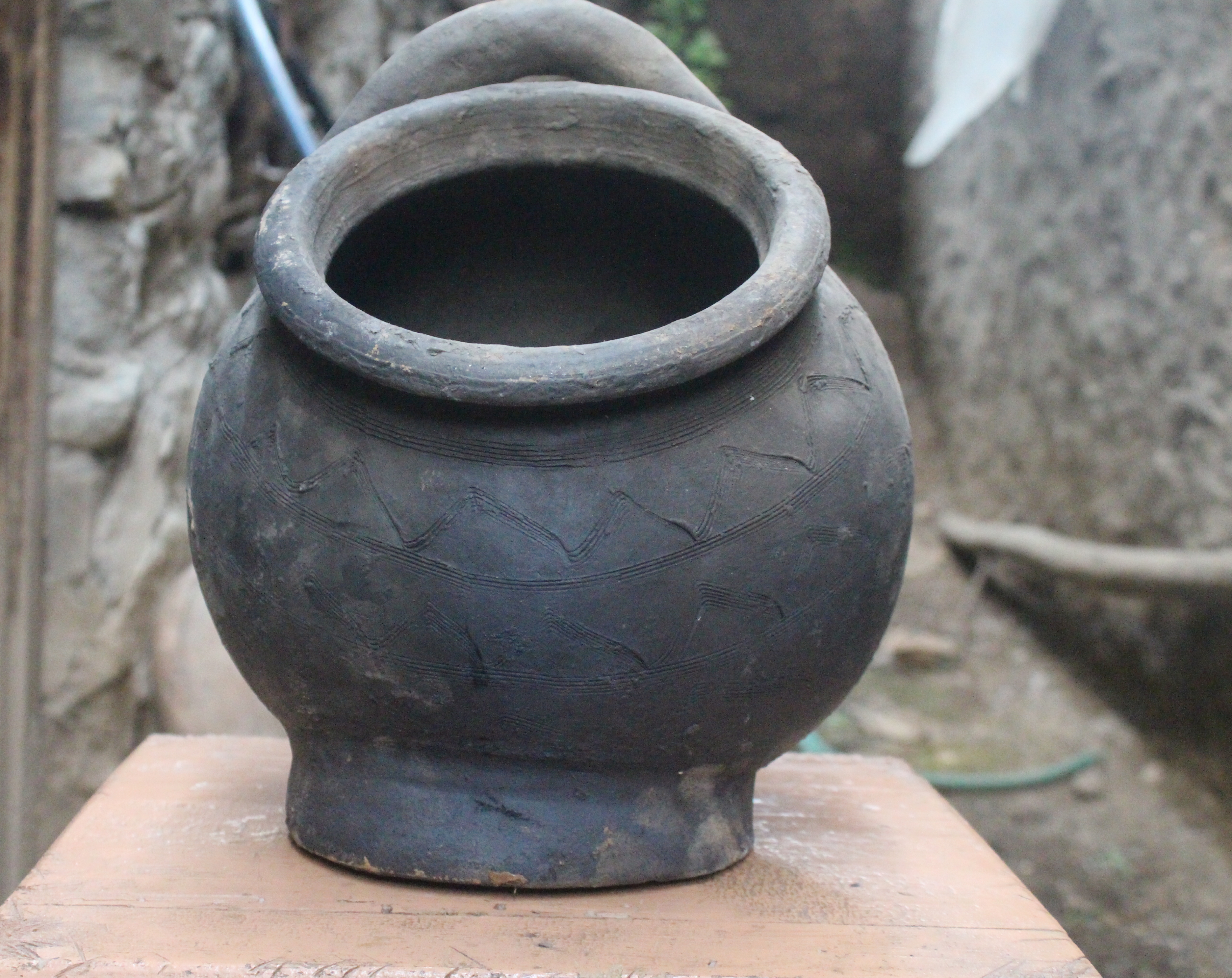
It is important to mention that only a special type of clean soil called czech is used in pottery. The lumps of clay after kneading like flour with a small hammer are sifted and dissolved in water. Kneading is considered to be a tough job as a potter can’t take his eyes off the clay. The clay is then applied to the chalk after being passed through mould. Here the skills matter. Once the pot is ready on the chalk, a thread is used to cut it. Further, the vessel is left to get dry. Afterwards, different designs and colours are applied on the utensils accordingly.

Unfortunately, there is growing frustration among artisans associated with this ancient industry. The potters claim that they sell these pots to shopkeepers at as meagre an amount as Rs 50, for which the retailers earn anything ranging from Rs. 300 to 400 for the same product.

“The cost and labour charges for making these utensils is very high but the income is very low. We earn very little despite toiling for the entire day. The other problem is that it takes one a minimum two to three years to learn this job but the profits are not commensurate,” he said.
Whining over the deplorable condition of this art, another famous potter of the community Ghulam Hassan Kumar seeks government’s help for reduction in the prices of electric chalk, and skill enhancement of the potters. He emphasizes the need for modernizing traditional pottery, “so as to make pottery items more saleable in the market.”
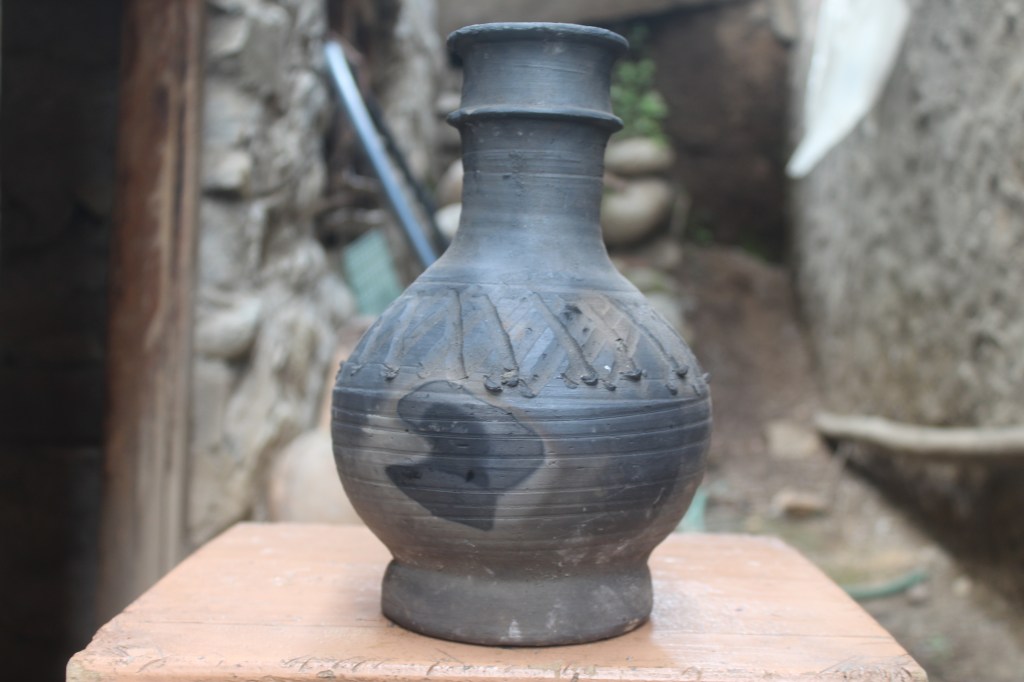
“Pottery is not only a paradigm of Kashmiri culture, but also a treasure trove of ancient heritage. Earlier, pottery was made on hand-operated chalk only, but now electric-powered chalk is also available in the market. I request the government to provide us electric chalks at an affordable price,” he adds.
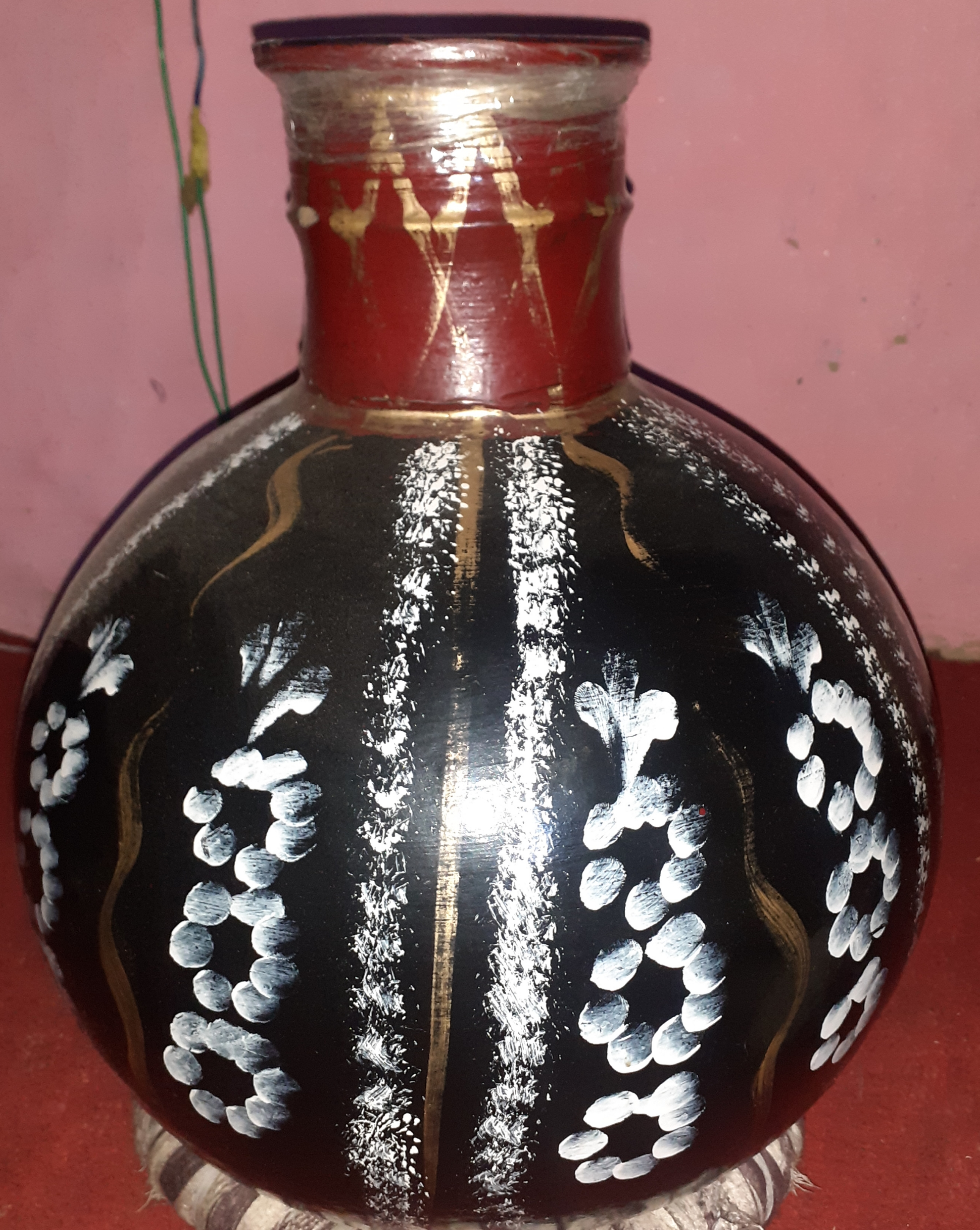
Kumar further states that the skilled artisans have either died or moved to other fields, leaving the industry in shambles. The use of clay items is now limited to rituals or specific cooking.
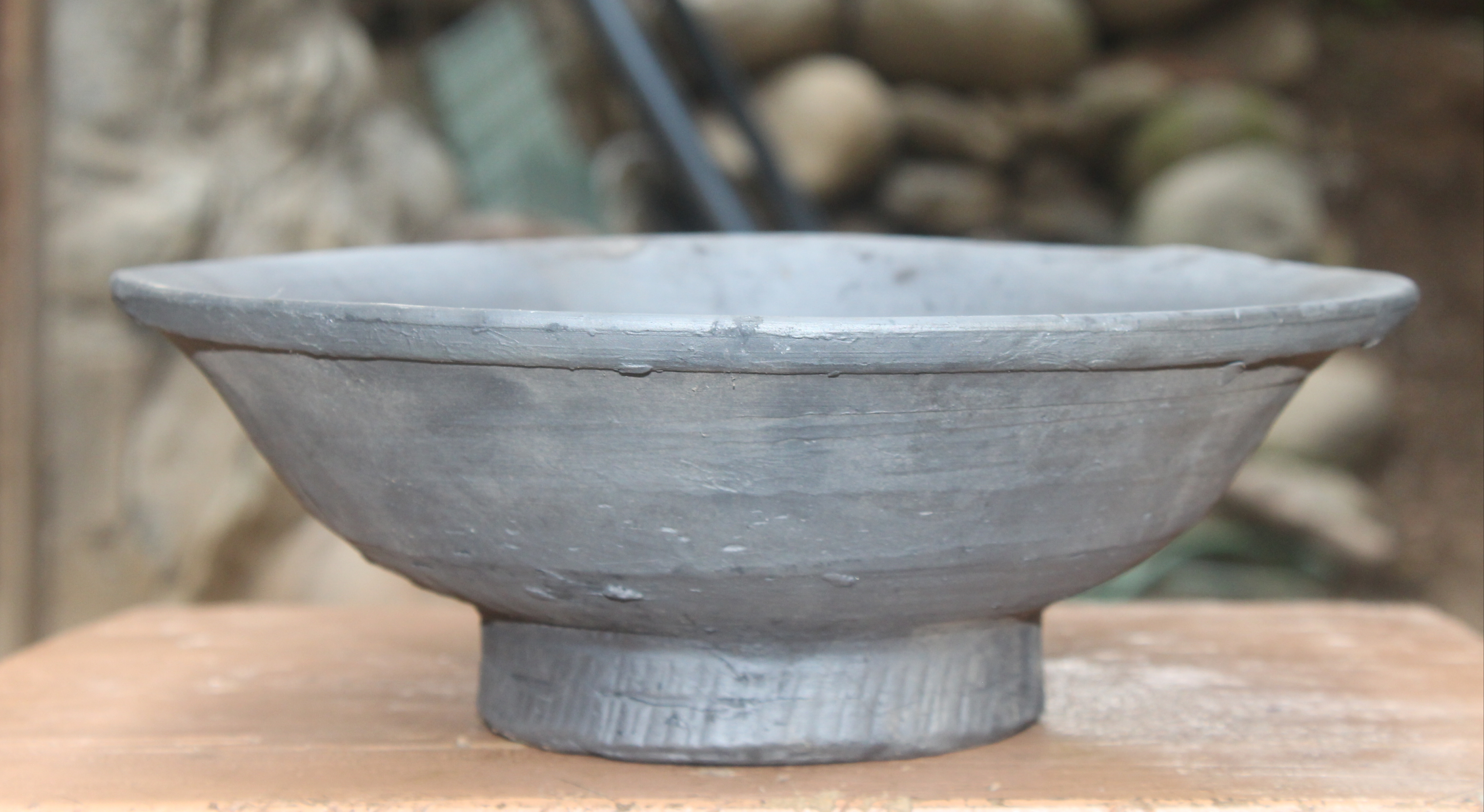
Artisans also believe that utensils made of copper, plastic, aluminium and steel are badly affecting the market of pottery. They are of the opinion that people are now attracted towards new things and modern technology.
 The Rural Newspaper